
Recommended Grades: K Through 5th grade
Ready for a fun, easy, and sweet science experiment that your kids will love?
You have probably seen rock candy before, but did you know that it is a great way to learn how minerals form? Lets start our experiment with a pop quiz!
Are sugar crystals minerals?
We can break this down using the definition of a mineral: A mineral is naturally occurring, inorganic, crystalline solid with a definite chemical composition. One of the elements that make up sugar is carbon, making sugar an organic substance. So, no, it is not considered a mineral. It does, however, form a crystalline solid and has a definite chemical composition making it a great way to learn more about crystals!
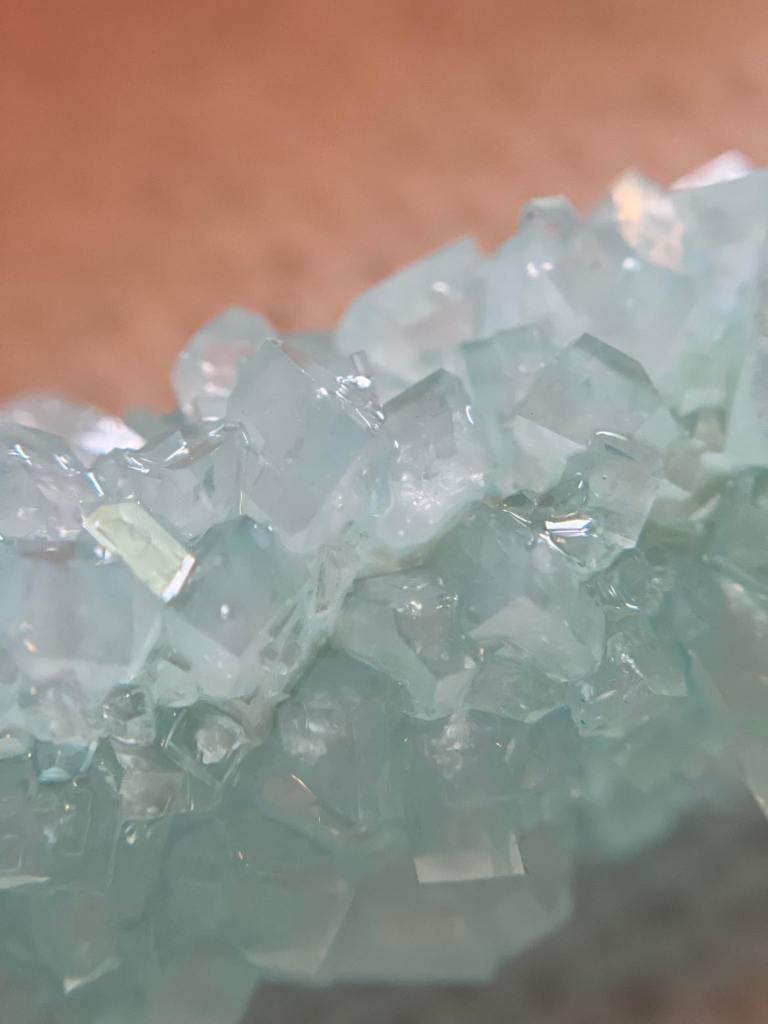
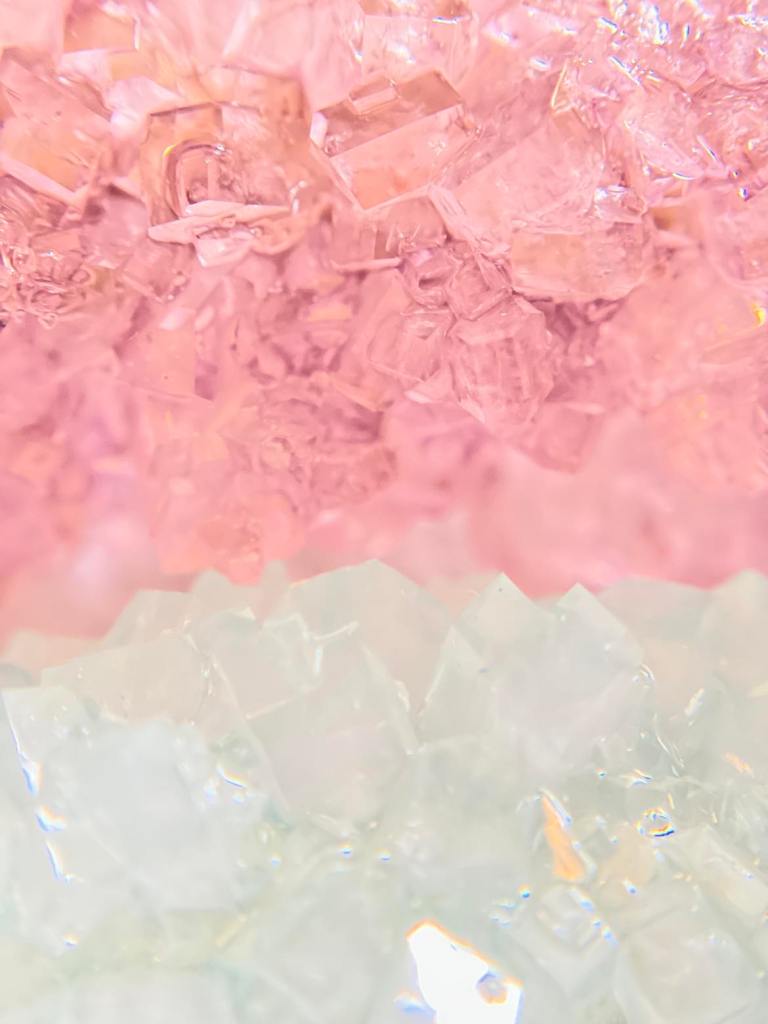
For a new mineral to form, the necessary elements must be available. Rock candy consists of sugar crystals that form from a simple solution of sugar and water. The first few atoms and ions of the new sugar crystals must bond to form the nucleus from which the crystal will grow. The nucleus will progressively grow by adding additional atoms and ions to its surface.
What does it take for these first few atoms and ions to bond? First, they must find each other. Our sugar solution consists of atoms that are constantly moving around, bumping into each other, and forming chemical combinations. Some of these combinations will have the composition and structure required to form a crystal, or embryo. However, these combinations still won’t grow to form a crystal if the crystal is less stable (has a higher Gibbs free energy of formation) than the remaining solution. At some point, the temperature, pressure, or composition of the solution will change such that the new growth does represent a more stable configuration. This type of crystal formation is called homogeneous nucleation.
Our sugar crystal experiment takes advantage of the structure of an existing crystal. With this advantage, some of the energy problems mentioned above are avoided. Coating the stick with sugar provides the nucleus for growth and the need to form the new embryo is eliminated. This type of crystal formation is called heterogeneous nucleation.
When nuclei are stable, growth will occur by progressively adding atoms and ions. The size of the crystals formed will largely depend on the rate of change in temperatures, pressures, and saturation of the fluid. For example, rapid cooling from a relatively high degree of saturation, as in our experiment, will produce many small crystals. If the experiment was restricted so that saturation was low, larger crystals are more likely to form.
Materials needed for this experiment
- Water
- A Large Pot
- Granulated Sugar
- Bamboo Skewers or String (we used 6inch Rock Candy Sticks With Ball Wood Swizzle Sticks )
- Kool aid-packets
- Glass Jars
- Clothespin
- Craft Stick (optional)
- Spoon
The Procedure
- Start by soaking your Bamboo skewers in water and leave them to soak for approximately an hour.
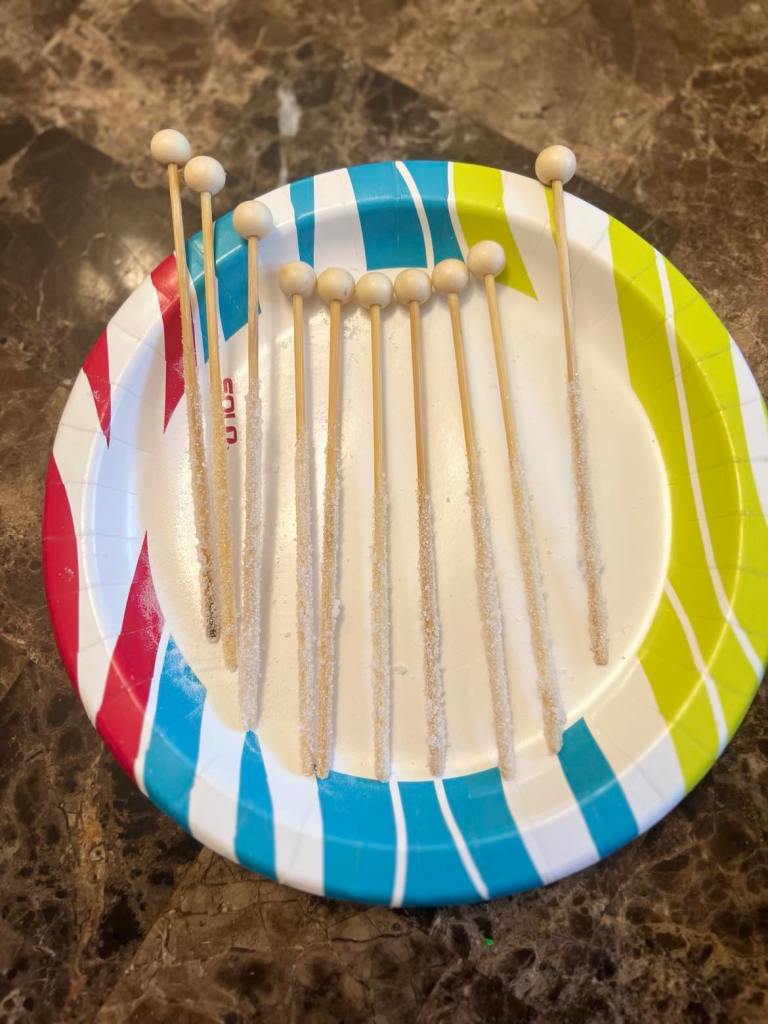
- Remove skewers from the water, and then coat the bottom half of them in sugar.
- Allow the skewers to dry completely.
- Place four cups of water in the pot and place on medium heat.
- Start adding your granulated sugar to the water as it warms up. Add 1 cup of sugar at a time and stir it until it is completely dissolved.
- Keep adding in 1 cup of sugar at a time until you cannot get any more sugar to dissolve in the water. (I used roughly 7 cups of sugar)
- Once you are unable to add anymore sugar, bring the mixture to a slow boil and let it boil for 10 minutes.
- Remove the pot from the heat and allow to cool (10-15 minutes)
- While the water/sugar mixture is cooling place your Kool-aid into each jar.
- Once the water/sugar mixture has cooled for 10-15 minutes, pour it into each jar. (you only need to add mixture to cover the bottom half of the bamboo stick that is covered with sugar). Stick the mixture until the Kool-aid is completely dissolved.
- Allow the Kool-aid mixture to cool completely. ***IT IS IMPORTANT THAT THE MIXTURE IS COOLED COMPLETELY PRIOR TO PLACING THE SKEWERS INTO THE MIXTURE. IF SKEWERS ARE PLACED IN HOT WATER, IT WILL DISSOLVE THE SUGAR ON THE SKEWERS***
- Once the mixture is completely cooled, place the skewers into the jar.
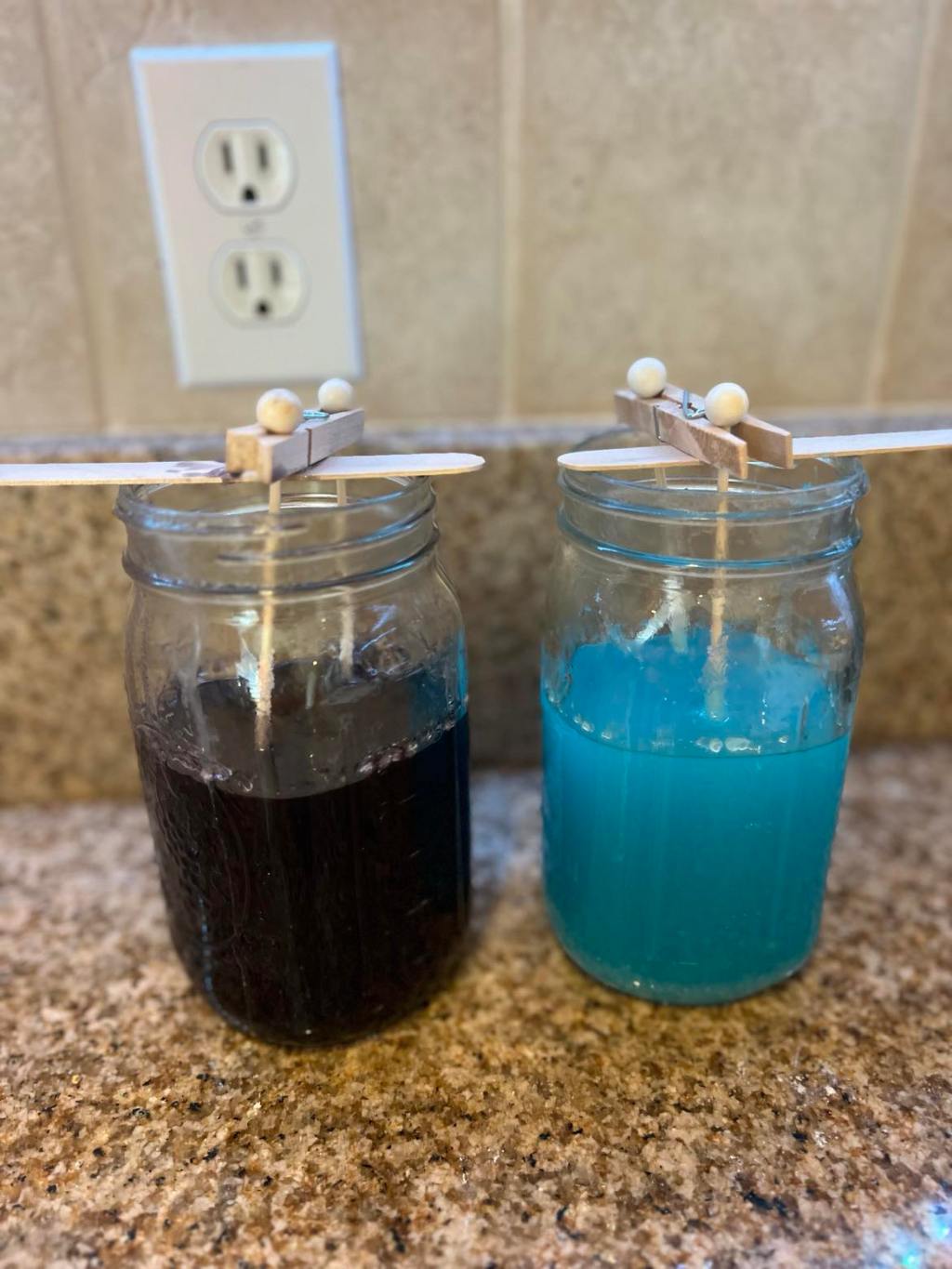
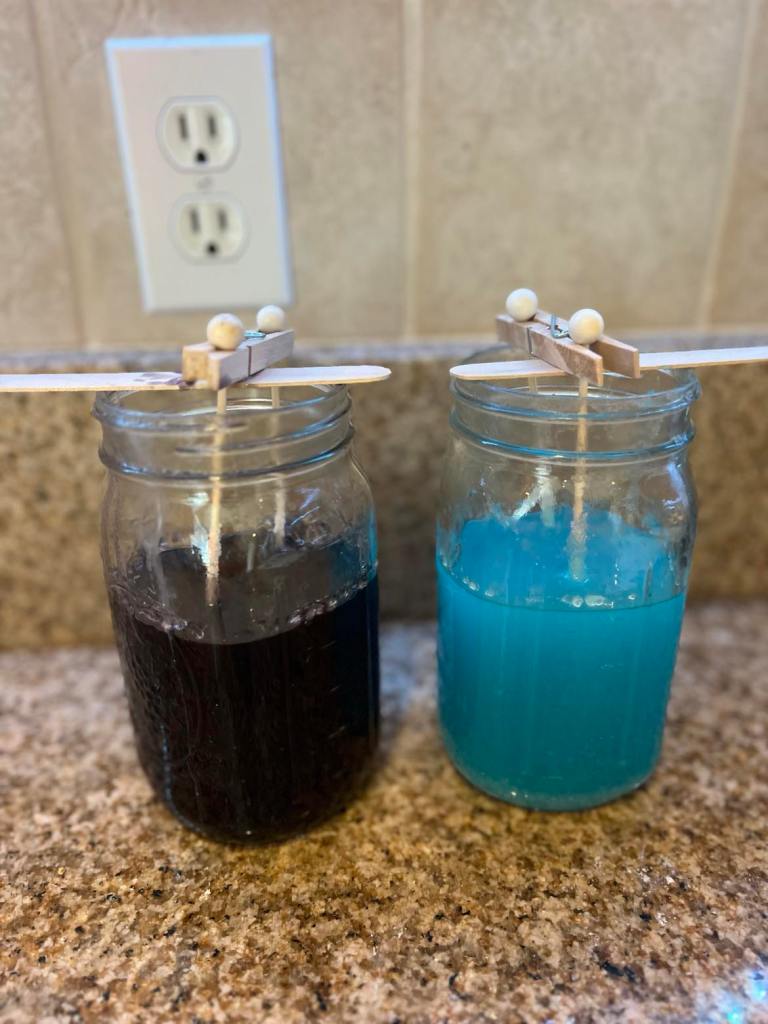
- Secure skewers with a clothes pin. If using a wide mouth mason jar, place the craft stick across the top to help support the clothes pin. Be sure that the skewer is not touching the bottom of the jar or the sides of the jar.
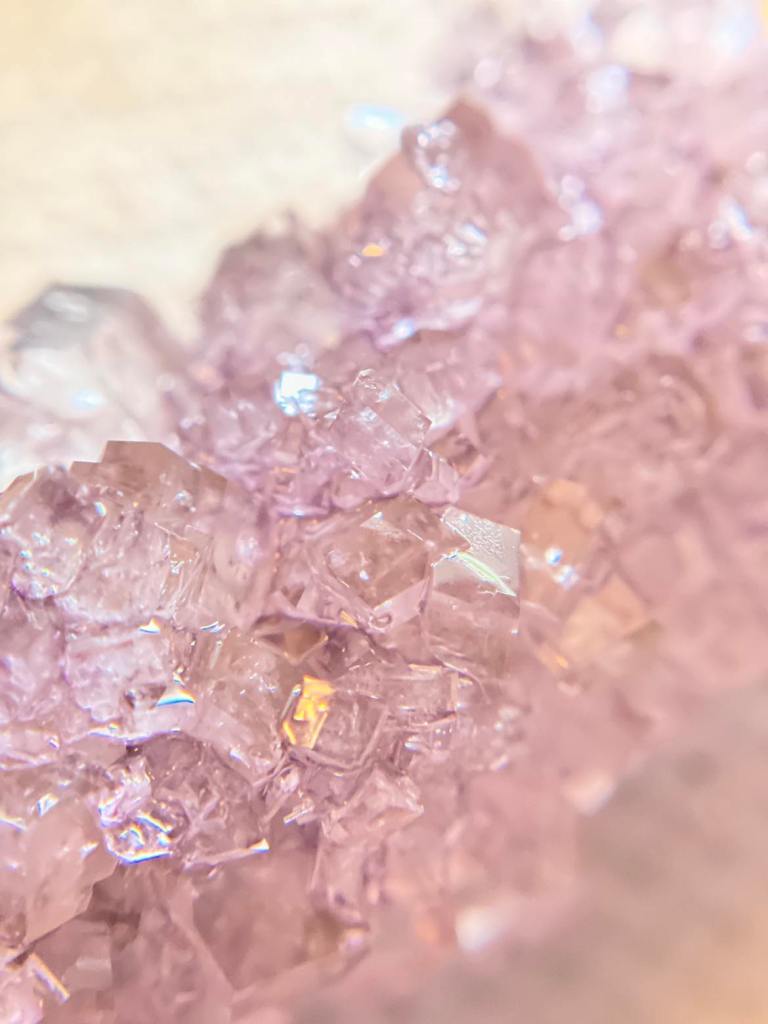
Now all you have to do is wait and watch the crystals form. We allowed ours to remain in the mixture for 2 weeks. You can pull them out and observe them each day.

 Education With Parents