

Recommended Grades: All ages
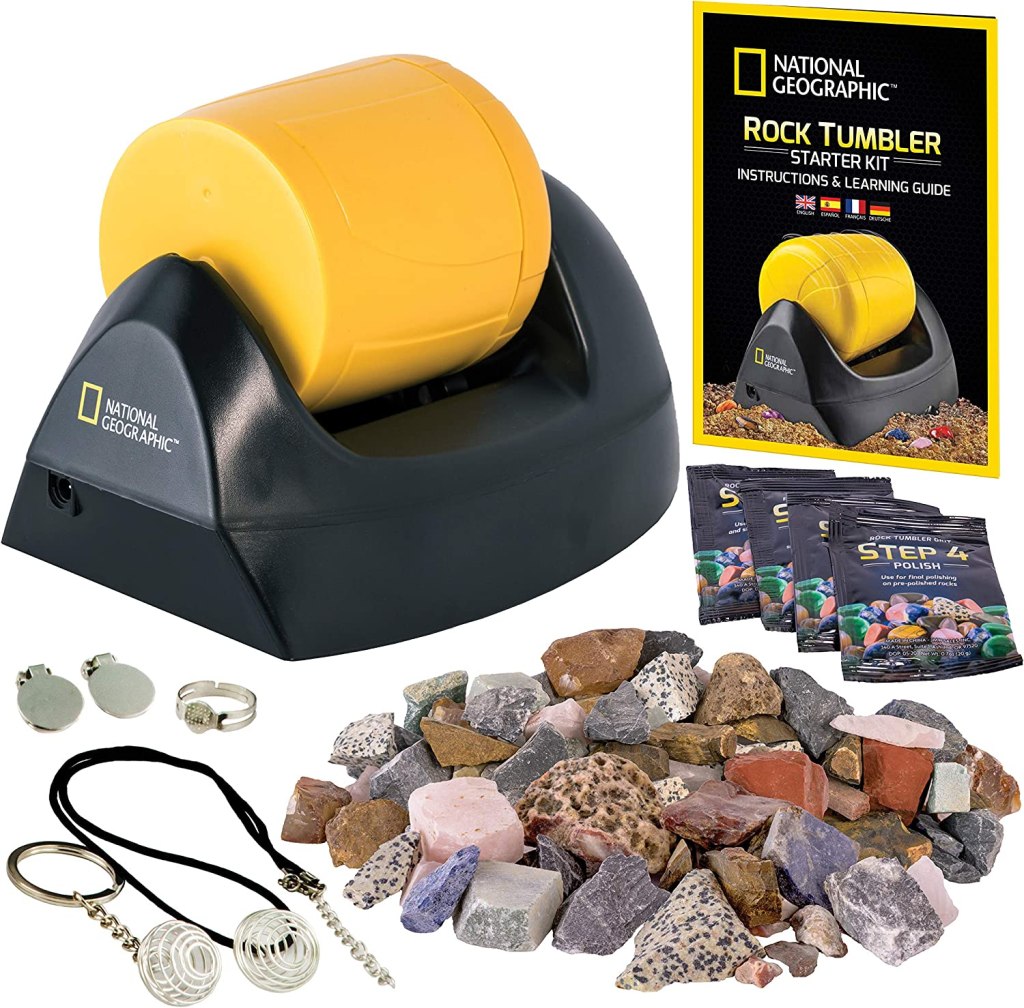
If you’re following along with our rock tumbling activity, it is time to change the grit and make some important observations! To recap, we are polishing gemstones using our National Geographic Starter Rock Tumbler and using this fun activity to teach our kids about mineral properties and more.
See Lets Get Ready to Tumble (Part I) to learn more.
Now that we have been tumbling our minerals for about 10 days, we are going to again open up the tumbler barrel and see how things are looking. This is a great time to teach about weathering processes and sediments!
Things to Learn
We can use our rock tumbling activity to teach about the formation and transport of sediments!
Our beautiful gemstones were once part of a larger rock formation. Through the processes of weathering, these gemstones are broken down into the smaller pieces we hold today. As we learned in our Mineral Properties lesson, these gemstones are more resistant to weathering processes.
Weathered materials are eroded from highlands and transported to lower elevations. Through this process, nature creates smooth, polished rocks like the minerals in our tumbler. Depending on the energy level of the moving water, think a roaring river compared to waves lapping on the shoreline, nature can take thousands if not millions of years to create this polished effect!
Check out our sediment worksheets and GeoKidz rock tumbling word search to learn more!
Patience continued
We still have two more grit levels, or about two more weeks to polish our gemstones. Although it has been a fun journey, we are excited for the final product. Be sure to check our Let’s Get Ready to Tumble (Part 3) to see our beautiful gems and to learn the difference between a gemstone and a gem!
Recommended Products
 Education With Parents