
Recommended Grades: K through 4
You might have already discovered this, but the kitchen is one of the best places to teach kids about science! Our kitchen almost always looks like a middle school science lab; sometimes it is an avocado seed sprouting in the windowsill, others it might be stalactites growing between plastic cups. Science experiments aside, the kitchen is an even more powerful tool when used for its actual purpose – cooking!
Cooking with your kids, going through the process of following instructions and carefully measuring ingredients is a great way to put those math skills to the test. It is also a great time to test the scientific process, form a hypothesis like “I think it will taste better if I add (fill in the blank)” and then test it out! Scientific breakthroughs are often about trial and error.
So it is no surprise that a lot of great DIY science experiments include some form of cooking and here is one of our favorites – Modeling the Rock Cycle with Chocolate!
Our Favorite Children’s Book Teaching The Rock Cycle
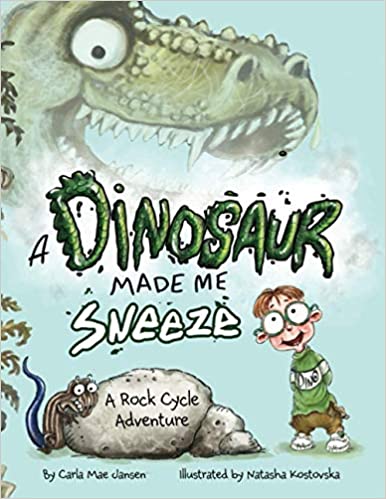
How did an ancient dinosaur makes a modern-day Martin sneeze?! Find out in this hilarious science-filled adventure through time.
Modeling the Rock Cycle with Chocolate!
Materials Needed
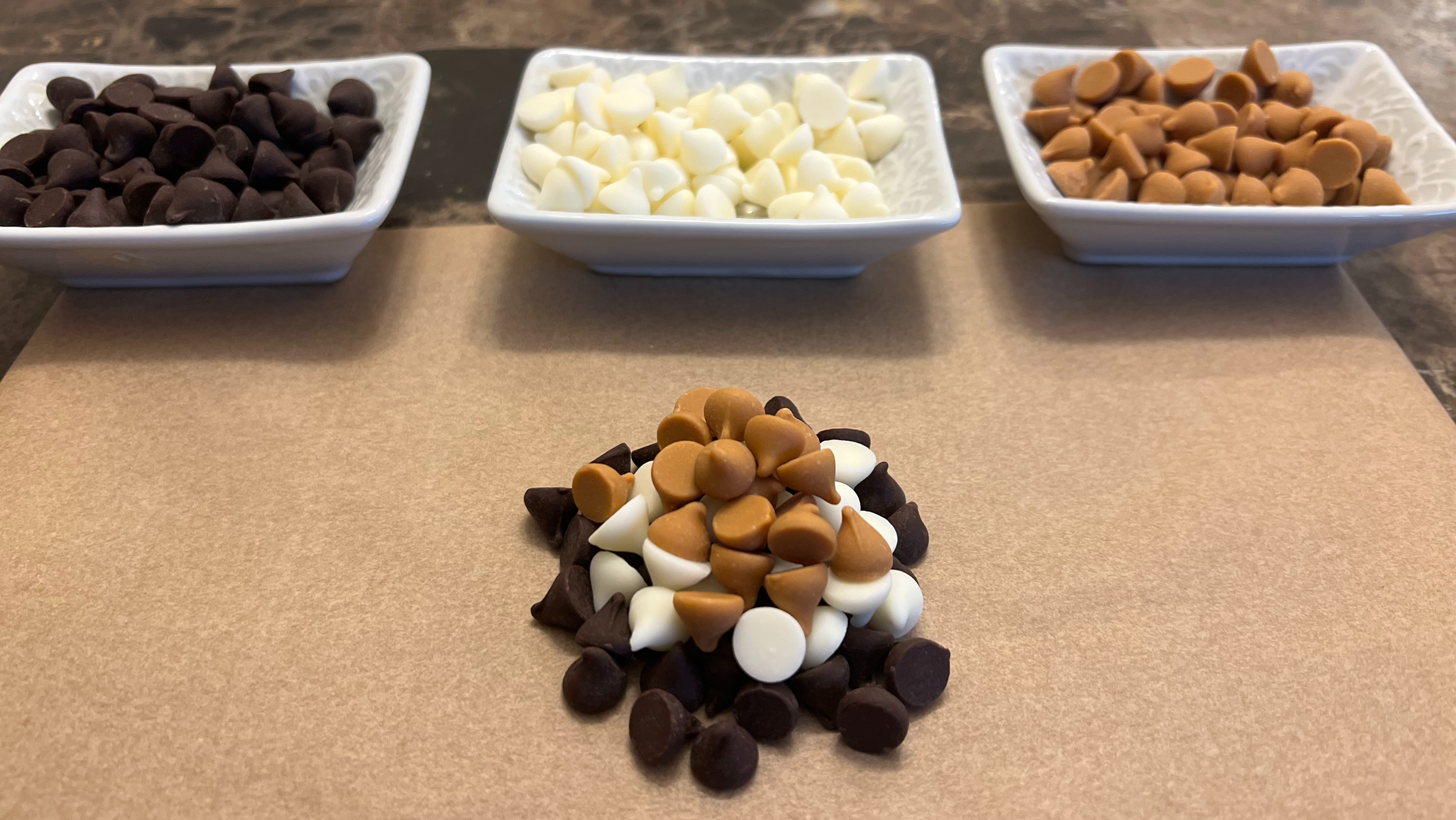
- chocolate chips or similar (we used milk chocolate, white chocolate, and butterscotch chips for our experiment)
- parchment paper
- hair dryer
- stove top
- small pot
Understanding the rock cycle is fundamental to understanding geology and the different types of rocks. This lesson, although a little messy, is so much fun for the kids and yes they can sample the experiment!
The Activity
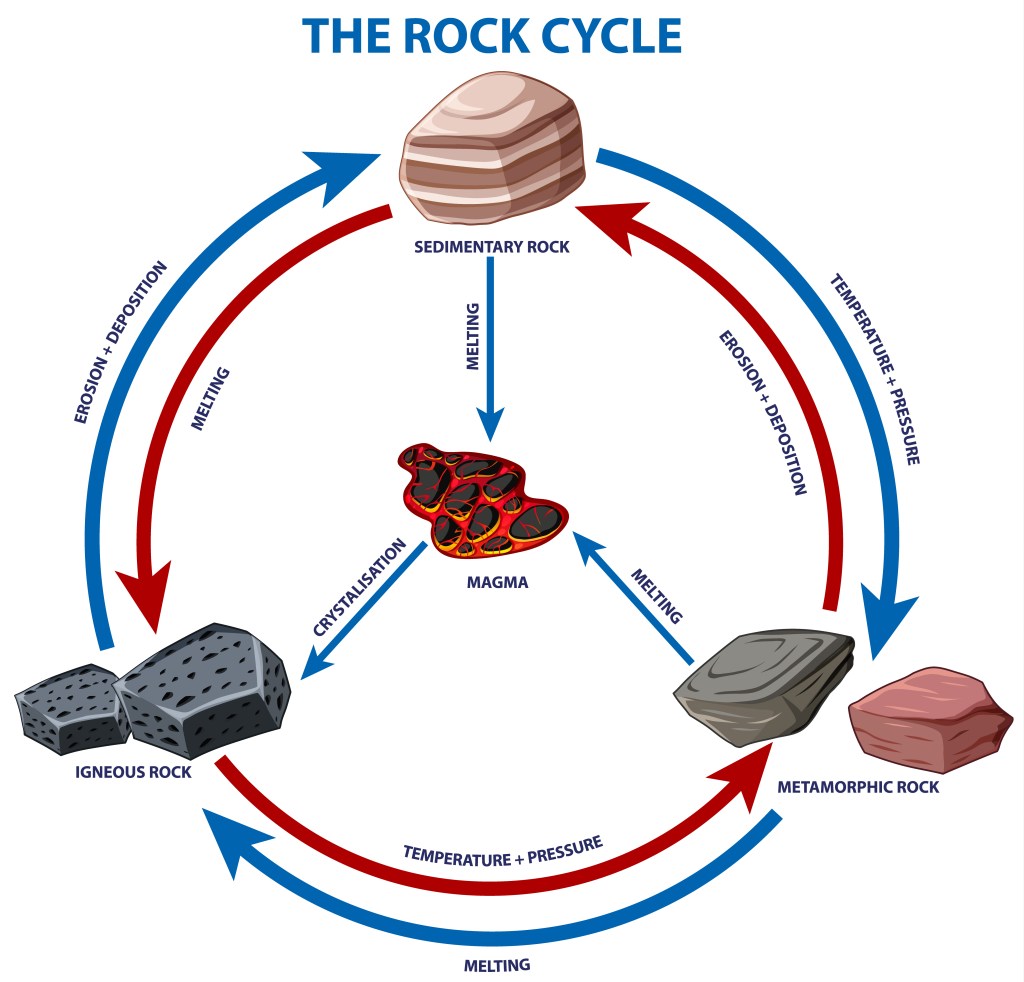
The chocolate rock cycle will take you through the processes of the rock cycle and teach about the different types of rocks (sedimentary, igneous, and metamorphic).
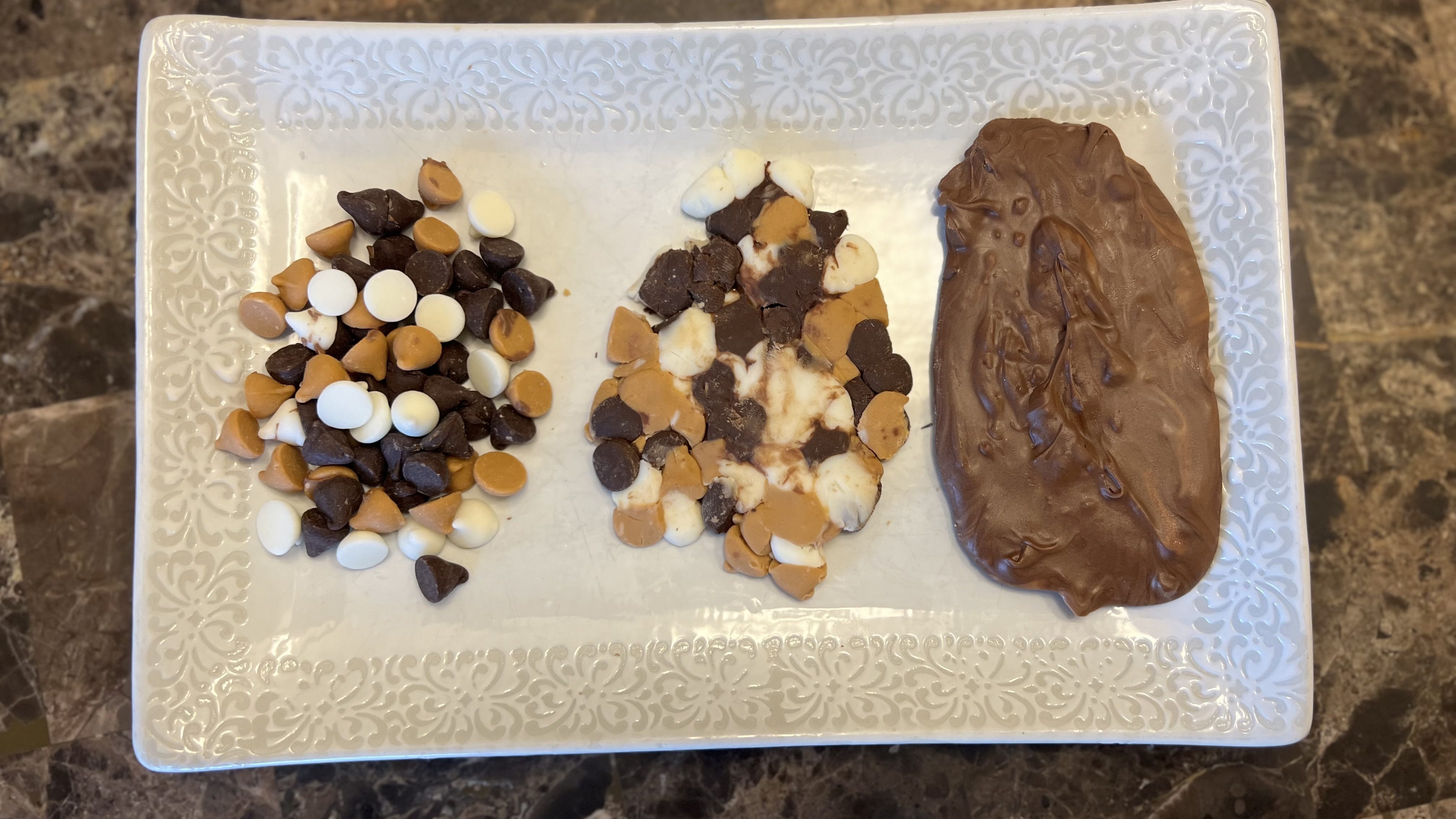
- Divide the different chips, or whatever you decide to use. These represent sediment. Sediment forms by the breakdown of older, larger rocks. Sediment is transported or carried such as by water or wind and deposited in a sedimentary basin.
- Place a pile of chocolate chips on a sheet of parchment paper to model a sedimentary basin. You can try to separate the different chips into distinct layers or mix them all together. How do you think different sediments would get separated in the real world? How would they get mixed?
- Fold the parchment paper over the pile.
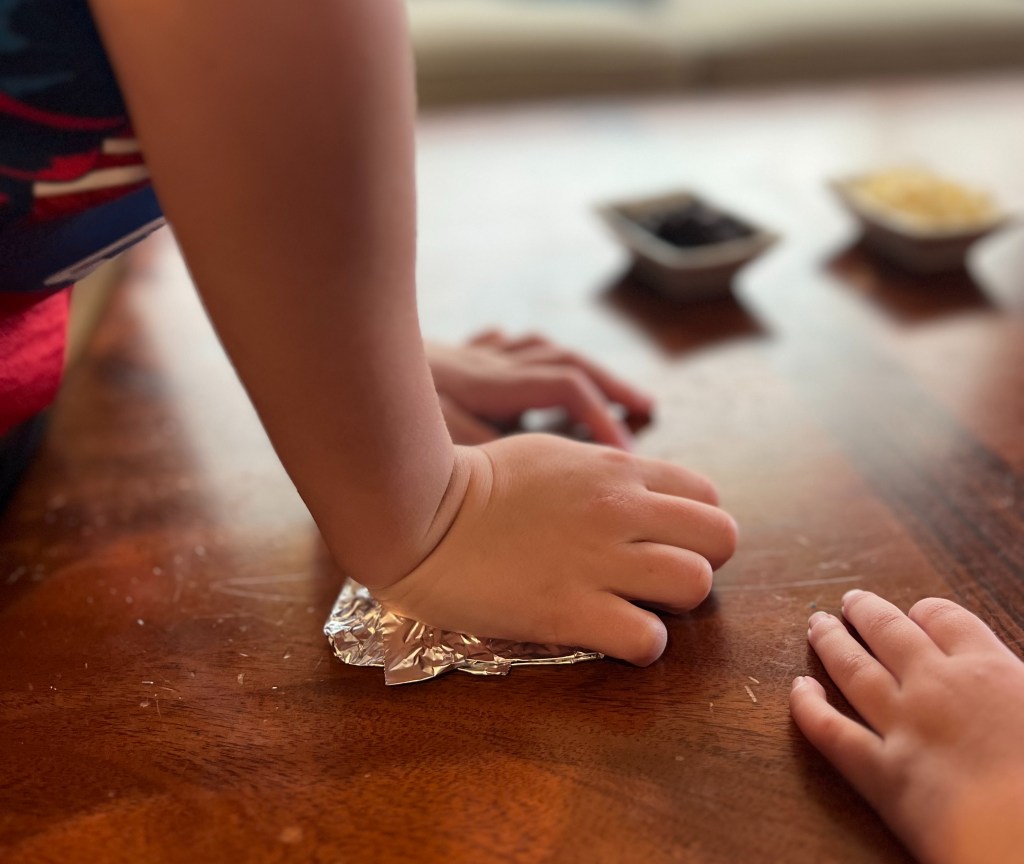
- Press down hard using your hand. Depending on your chocolate, you might want to apply a little heat before to help the chips stick together.
- Open the foil and carefully peel your chocolate from the paper. These compacted chips represent sedimentary rock! Notice how the chips have been “cemented” together? Did different layers form or are they all mixed up?
- Place the chocolate back on the parchment paper and again fold the paper over the top.
- Apply heat using a hair dryer. The key here is not to apply enough heat that the chocolate will melt, but you want it gooey. (Melting would model an igneous rock which we will get to a little later.)
- After heating the chocolate, apply pressure by pressing down on the foil using your hand.
- Again open the foil and carefully peel your chocolate from the foil. This represents a metamorphic rock! Metamorphic rocks form when existing rocks are exposed to extreme pressure and/or temperature. Notice how the chips have changed shape. Maybe new colors are starting to form (you can think of these as new minerals forming in metamorphic rock).
- Next, with the help of an adult, melt the chocolate. We melted ours in a small sauce pan on the stovetop.
- Pour the melted chocolate on a piece of parchment paper and let cool. This new piece of chocolate represents an igneous rock! Igneous rocks form when magma or lava cool and solidify. Do you know the difference between magma and lava? Molten material beneath the surface of the Earth is called magma, molten material that cools at or near the surface of the Earth is called lava.
Add to the discussion
Try to think of and discuss as many of the different variations of the rock cycle as you can. We started with sediments, but an actual rock can start its own journey from any one of the three types. For example, an igneous rock can be altered into a metamorphic rock, undergo weathering, and again form a sedimentary rock. The Earth is great at recycling rock and continually goes through this entire process!
During each step of the rock cycle model, discuss where you might find such processes within the Earth’s crust. For example, imagine the chocolate chips as sand on the beach. Then imagine how tectonic forces can drive these materials deep beneath the surface, passing through different rock forming processes.
Discuss how you can form different types of ‘rocks’ in your activity. What would happen if you added different ingredients?
 Education With Parents